mercredi 6 novembre 2013

Madagascar: les jeunes femmes, premières victimes de la crise

mis à jour le
Elève d'une école coranic en  Sierra Leone,  REUTERS/Finbarr O'Reilly
Elève d'une école coranic en Sierra Leone, REUTERS/Finbarr O'Reilly


A Madagascar, celles qui paient les conséquences de la crise, sont les jeunes filles. Entre les viols et les diverses agressions, elles doivent vivre dans un climat d’insécurité permanent.


Alors que le site du Quai d'Orsay révèle que le pays figure parmi les Etats les plus pauvres au monde, (151ème place sur 187 selon l’Indicateur de développement humain PNUD 2011), Madagascar doit faire face aux conséquences de la crise économique qui frappe les jeunes femmes. Dans un pays où 76% de la population vit sous le seuil de pauvreté, le nombre d’agressions sexuelles et de prostitués a fortement augmenté, relaie le site de la chaîne qatarie Aljazeera.
«Même s’il y avait des viols de jeunes filles et même de bébés avant le coup d’état, cela restait exceptionnel. Mais maintenant les choses sont différentes», explique une productrice locale.
De plus, les coupables ne sont pas toujours condamnés, rappelle la ministre de la Justice Nadia Rakotomala. Les victimes ne portent pas toujours plainte. C'est pourquoi il est difficile de chiffrer avec exactitude l'évolution de ce phénomène:
«Ils ne sont pas systématiquement signalés, les gens ne considèrent pas cela comme un crime. Mais ils considèrent cela comme une activité commerciale et culturelle normale».
Pour éviter que leurs enfants soient victimes d’agressions ou se prostituent, certains parents ont trouvé une alternative: ils marient leurs filles dès l’âge de 12 ans.  Ne pouvant pas subvenir à leurs besoins, les familles perçoivent la dot fournie en bétail ou en monnaie. Comme une bouée de sauvetage sur laquelle ils peuvent se reposer un certain temps.
Cette pratique est courante dans les campagnes et dans certaines grandes villes de l’île, même si la loi interdit les mariages de personnes de moins de 18 ans depuis 2007. Selon Afrik.com qui a interrogé Esther Volonan, présidente de l’association Avenir (qui lutte contre toutes formes d’injustice à Madagascar), ce texte n’a pas éradiqué les mariages précoces.
«Des milliers de jeunes filles sont forcées de se marier très tôt… Dans les campagnes c’est une coutume », affirme la militante.
Autre alternative, le placement des jeunes filles dans des maisons d'accueil au village. C’est un endroit où elles vivent en communauté en attendant de décider ce qu’elles vont faire plus tard. Une maison de transition à mi-chemin entre la tutelle parentale et l’indépendance. Toutefois, c’est souvent le dernier rempart avant l’exploitation et la prostitution.
A l’approche du second tour de l'élection présidentielle, prévu le 20 décembre, le pays demeure en suspens : si le résultat de cette élection qui oppose Jean-Louis Robinson et Hery Rajaonarimampianina est accepté sans violence, Madagascar devrait retrouver son climat paisible, ainsi que les nombreuses donations suspendues après le coup d’état de 2009.
Lu sur diplomatie.gouv.fr, Aljazeera, Afrik.com

Révolte des femmes soudanaises : Ils peuvent nous battre mais ils ne nous briserons pas !


Hala Alkarib

2013-11-02, Numéro 301


cc CRS
L’islam politique au Soudan reste puissant et se manifeste par la flagellation des femmes, pratique justifiée dans la Constitution par l’Indecent and Immoral Act. Malgré tout, les femmes soudanaises restent défiantes et résistent à ces lois misogyne et injustes.
Après des années d’injustices, la colère monte au Soudan où les manifestants pacifiques sont blessés et tués par les forces du régime soudanais. Le Soudan a été exposé à la brutalité de l’idéologie dogmatique de l’islam politique et la population a été dépouillée de sa dignité. Cette histoire n’est que la pointe de l’iceberg. Les femmes soudanaises sont le reflet de la cruauté et de la disparité imposées par le régime au pouvoir.

Depuis 25 ans, des femmes sont flagellées publiquement. L’idéologie de l’actuel régime soudanais était claire dès le premier jour : terroriser les femmes ce qui équivaut à paralyser toute la nation. Comme tous les dogmes dans l’islam politique, le régime a estimé que le moyen de garantir sa position passait par le contrôle du corps, de l’esprit, de l’existence des femmes et de leurs interactions publiques. Son idéologie misogyne se fonde sur la notion selon laquelle les femmes sont un problème et doivent être disciplinées et contrôlées, que les femmes sont à la fois dangereuses et les principales instigatrices de l’immoralité, responsables de tous les maux de la société. Donc on doit leur dire comment se comporter en public.

CRIMINALISER LES FEMMES POUR JUSTIFIER LA MISOGYNIE

"Ce n’est pas suffisant de leur parler. Nous devons les punir et instiller la peur dans leur esprit parce qu’elles ne sont pas intelligentes et pas à la hauteur sur le plan spirituel. Leur père et leur mari sont incapables de les contrôler". Voilà ce qui sous-tend l’article 152 du Code pénal soudanais, l’Indecent and Criminal Act, sur la base duquel Amira Osman, une militante soudanaise, a été traduite en justice, et par lequel des milliers de femmes pauvres et invisibles ont déjà été jugées, condamnées et flagellées publiquement. Leur rire est considéré comme un crime, leur présente provoque le péché.

C’est ainsi que le régime a vaguement élaboré l’article 154 du Code pénal : "Pratiquer la prostitution". L’article définit "qu’un endroit de prostitution est un endroit destiné à réunir des hommes et des femmes entre qui il n’y pas de relations maritales, de famille, dans des circonstances dans lesquelles l’acte sexuel va probablement être commis". Des centaines de femmes sont accusées suivant cet article, à l’intérieur de leur maison ou à leur place de travail. L’interprétation de cet article permet effectivement d’accuser des femmes dans tout lieu public où elles peuvent se trouver dans la même pièce qu’un homme avec lequel elles ne sont pas apparentées.

Le crime de "possession de matériels et de démonstration contraire à la moralité publique" de l’article 153 a exposé des milliers de jeunes femmes à la folie de la police des mœurs et les a privées d’une vie simple et digne. Les lois concernant l’ordre public au Soudan sont rédigées de façon suffisamment vagues et élusive pour permettre aux juges et aux forces de maintien de l’ordre de faire usage de leur propre interprétation des lois. Ceci a fait du système légal une machinerie qui sert certains intérêts, avec des lois manipulées et tordues contre la présence des femmes et leur participation aux affaires publiques.

Sara, âgée de 25 ans, est une artiste et une enseignante dans une école privée. Au début de cette année, alors qu’elle rentrait chez elle, elle a été arrêtée et emmenée sur ordre de la police. Elle portait un pantalon et un T-shirt à longues manches. Elle a été sexuellement violentée, humiliée et ensuite accusée sous l’article 152 parce qu’elle portait un pantalon. Selon son récit, lorsque la police l’a arrêtée et emmenée, il y avait déjà douze autres femmes dans le véhicule, qui toutes circulaient sur la voie publique, et qui ont été arrêtées au hasard par la police des mœurs. Aucune d’entre elles n’avait commis le moindre crime, juste marchaient-elles le long de la route, s’occupant de leurs propres affaires. Elles ont été détenues pendant 24 heures. On leur a enlevé leur téléphone. Au matin le juge les appelé par leur nom et lorsque Sara fût appelée, le juge lui a demandé "quarante coups de fouet ou payer 1000 Sdp ?" Elle a dit qu’elle n’avait que 10 livres et alors le juge a crié "40 coups de fouet" et les soldats l’ont empoignée. Ils l’ont emmenées dans une cour à l’intérieur du bloc de détention, l’ont fait s’asseoir sur le sable et ont commencé à la flageller. "Après dix coups de fouets extrêmement douloureux, j’étaos insensible et je pouvais seulement entendre les moqueries et les rires des soldats qui traînaient par là et qui demandaient qu’on me batte plus fort", a-t-elle rapporté.

BATTRE LES FEMMES POUR BRISER LEUR RESISTANCE

Halima, âgée de 44 ans, distille de l’alcool localement et le vend à des hommes dans tout Khartoum. Elle est le gagne-pain de sa famille de six enfants et de deux vieux parents. Tous dépendent d’elle. Elle a dit qu’elle a été flagellée et emprisonnée maintes fois ," et chaque fois qu’ils viennent, ils confisquent l’alcool, le revendent à des clients ou le boivent. Ils me battent pour l’avoir fait".

LES MORTS SONT PLUS PUISSANTS QUE LES VIVANTS.

Amena. Agée de 56 ans, vendait du thé à côté de l’hôpital. Elle raconte : "Ils passent leur temps à prendre ma bouilloire et mes tasses. Parfois ils me flagellent et si j’ai un peu d’argent je leur le donne. Ces jours j’ai trouvé un emplacement à côté du cimetière pour vendre mon thé. J’ai toujours des clients mais la police m’approche rarement. Je crois que les morts sont plus puissants que les vivants dans notre pays".

Les histoires de ces femmes sont le reflet plus ou moins de la vie de millions de femmes au Soudan

ELLE AVAIT OMIS DE COUVRIR SES CHEVEUX

Des centaines de femmes sont venues assister au procès d’Amira Osman, une militante soudanaise accusée sous l’article 153 pour n’avoir pas recouvert ses cheveux d’un foulard. Son procès a maintenant été repoussée jusqu’au 4 novembre 2013. Ces femmes n’abandonneront pas leur humanité et leur dignité malgré la menace de flagellation suspendue au-dessus de leur tête.

La bataille contre le régime de l’ordre public soudanais, qui a infiltré le Code pénal du pays, a cours depuis des années dans tout le pays. Il a été utilisé pour réprimer les femmes, pour compromettre leurs moyens de subsistance, pour les appauvrir, pour limiter leur participation à la vie publique, aux sports, aux activités culturelles et leur mobilité ainsi que leur participation politique. Les lois discriminatoires soudanaises et le régime d’ordre public affectent les communautés pour les générations à venir en imposant la subordination des femmes dans l’esprit des jeunes générations et donc inhibe le potentiel de progrès et de paix


CE TEXTE VOUS A ETE PROPOSE PAR PAMBAZUKA NEWS


An interview with Nadifa Mohamed: “I don’t feel bound by Somalia…but the stories that have really motivated me are from there”

By Magnus Taylor


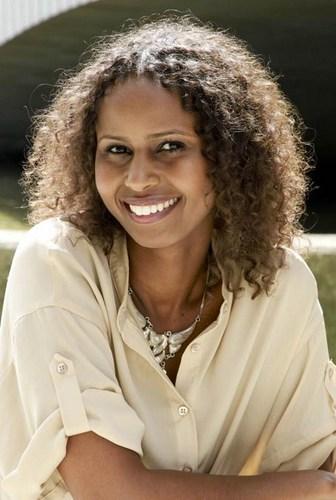
NadifaMohamed
Nadifa Mohamed: “I wanted [in this book] to sink deeply into a small thing.”
Nadifa Mohamed is a writer with a growing reputation as a powerful and poetic literary voice within the global Somali diaspora. Born in Hargeisa – the present-day capital of Somaliland – in the early 1980s, she left during the civil war when “the city wasn’t really functional – it was blacked-out and curfewed (but I don’t remember that).” This year she was nominated as one of Granta’s ‘Best of Young British Novelists’, her first novel, ‘Black Mamba Boy’ was shortlisted for The Guardian First Book Award.
Whilst most contemporary writing about Somalia focuses on the war, Mohamed’s recently published ‘The Orchard of Lost Souls’ is much more than just an account of violence and suffering.
Says Mohamed: “even if there’s a conflict people are still trying to live as normal lives as they can…despite the suffering that hits when the war breaks out, they are still pretending as far as they can that their lives are going to be the same as they expected them to be… people are not overwhelmed by conflict.”
To this end, Mohamed’s latest novel is a close-up portrayal of three women – Kawsa, Deqo and Filsan – whose lives intersect, diverge and then intersect again during a few weeks in 1987. It’s the eve of the Somali civil war and the rebels are closing in around Hargesia – the atmosphere is both febrile and yet, as Mohamed describes, profoundly normal.
Hargeisa was then something of a backwater in the larger Somali Republic ruled from cosmopolitan “Mogadishu the beautiful” with its “white-turbaned mosques, baskets of anchovies as bright as mercury [and] jazz.” Mohamed tells me that power was so concentrated in the capital that no building of more than 2 stories was permitted outside of Mogadishu – something that has made it such a political prize for those who have fought over it for the last 20 years.
But Mohamed speaks of Hargeisa with great affection, as a place in which she feels safer than in London. Indeed, Hargeisa is famous for its safe streets and low level of crime – money changers sit fearlessly behind huge piles of notes unprotected on the roadside and a gold market casually operates in the middle of town: “these feel like secrets, like secrets only people from those places know.”
Mohamed’s three main protagonists first meet in the city at a giant public rally on the anniversary of the country’s independence. The face of the President appears, Big Brother-like, constructed from placards held up by the crowd to become “a giant, a God who watches over them, who can dissolve into pieces and hear and see all that they do.” However, it’s what the state cannot control – the thoughts, feelings and personal relationships between ordinary people – that Mohamed is really interested in. Specifically, she wants to sink deeply into the minds of Somali people – so often overlooked as an undifferentiated mass of suffering and victimhood.
Kawsar – an old, rebellious widower – saves Deqo, a street girl, from a beating at the hands of a group of female government informers and enforcers (The Guddi). This results in Kawsar’s arrest by the police and subsequent beating after an interrogation by Filsan – a female soldier and daughter of a senior army officer – which leaves her bed-bound with a broken hip. Rather than becoming a story of the war, the book becomes a study of what goes on in the minds of these three characters.
Apart from a brief description of the fighting experienced by Filsan towards the end of the book, Mohamed seems to deliberately eschew the potentially dramatic episodes in the war. This could have included the levelling of Hargeisa by government planes or as Richard Dowden describes, the almost “biblical exodus”, when the entire remaining population of the city left and walked to Ethiopia. But Mohamed says this “would have drawn me away from what I really want to talk about – which was what was going on in people’s minds… I wanted [in this book] to sink deeply into a small thing.”
I ask Mohamed whether she will ever try to write a story from a different, non-Somali perspective: “My (personal) story starts in Somalia, so that’s where my books come from. But I don’t feel bound by Somalia…but the stories that have really motivated me are from there.”
She adds that “So many things are written about Somalis, but so few things are written by them…it also feels like an opportunity to set the record straight.” So in a sense Mohamed’s writing is political – an attempt to give a voice to those so infrequently portrayed in literature. And as she adds, it is “about discussing power and powerlessness…in a place that is seemingly always in flux, like Somalia, this becomes much more apparent.”
As one of a growing number of Somali diaspora writers, Mohamed enjoys the benefits of time, space and security that most of the current population of the country do not have. This perhaps explains why nowadays most of the best Somali literature is coming from outside the country.
But counter to plenty of conventional commentary, Mohamed doesn’t agree that the future of Somalia is in the hands of the diaspora:
“Diasporas can be quite dangerous”, she says “they can have quite a distorted view of their homeland. And they can come with a kind of sense of ownership – an almost colonial-type attitude.”
She also bemoans the fact that those sitting outside the country have “tried to say that there are just these big clans, and that’s who Somalia belongs to, and they’re all men and they’re all the same. But I don’t think they own Somalia – people like Kawsa own Somalia, people like Filsan’s maid. This is their home.”
In ‘The Orchard of Lost Souls’ Mohamed reminds us that amidst all the pain and suffering of war ordinary lives persist and not everyone is desperate to flee.
Magnus Taylor is Editor of African Arguments.

mardi 15 octobre 2013

Waris Dirie: ‘Female genital mutilation is pure violence against girls’

Waris Dirie (AFP) 

Waris Dirie was about five years old when she was left in a makeshift shelter under a tree for several days to recover from her “operation”, like all the girls in her community, she had undergone female circumcision, more accurately known as female genital mutilation (FGM). She still remembers her anger. “When they tried to convince me that God wants this, I said: ‘Did my God hate me so much?’ I remember telling my mother: ‘If he hates me, then I don’t want him.’” In the days after FGM, many girls die from blood loss or infection. Dirie says she lay there, talking to God, saying “make me stay alive. You owe me this now.”
Dirie, born to a nomadic family in Somalia, describes herself as not exactly the kind of daughter dreamed of by the traditional families in her community. As a very young child, she was wilful and headstrong, constantly questioning everything. When she was about 13, her father announced that she would be married to a man in his 60s. “I knew [most married women in her community] put up with everything and anything. Any abuse, hopelessness, and I thought, was I here to be used and be abused? I knew there was so much I could do with my life, but on my terms.”
Her terms have led to an extraordinary life and we meet in a London hotel room as Dirie prepares to receive a Woman of the Year award for her campaign work. Under the threat of her impending marriage, she ran away, running barefoot across the desert for days until she reached relatives in Mogadishu. From there, she managed to make it to London – an aunt was married to Somalia’s ambassador to Britain – and she worked as their maid for several years. When they returned to Somalia, she stayed on, learned English and got a job at McDonald’s, eventually being spotted by a photographer. By the 1990s, Dirie had become a supermodel, fronting Chanel campaigns and appeared in the James Bond film The Living Daylights.
Modelling could be fun, but ultimately wasn’t fulfilling. “I thought, ‘This is bullshit, fake.’ I couldn’t sleep one more night knowing the truth about what was happening to girls and look all …” She gives a mock smile as if posing in a fashion shoot. “I just knew that I had to tell the world that there was torture, an undercover war against women. But this is not one person’s war – all of us have to do something.” Now, she says, there is more awareness of FGM, but in the 1990s, “what really made me take a stand was that nobody was doing anything”.
Dirie’s profile had given her a voice and when she went public, in a magazine interview in 1997, about what had happened to her, and her desire to stop FGM, largely practised in communities in Africa, the Middle East and Asia, it created a great deal of attention. She was appointed a UN special ambassador; in 2002, she set up her Desert Flower Foundation to campaign against the practice.
The World Health Organisation estimates there are about 140-million women in the world who have had FGM, from removal of the clitoral hood to the whole excision of external genitalia before the vagina is sewn up, with only a small hole left for urine and menstrual blood. It usually happens before the age of 15, and in some cases is performed on babies, in the belief that the girl will grow up “clean”, her “honour” intact along with her virginity as a way of preparing her for marriage; this happens to three million girls every year. Aside from the intense pain and risk of infection at the time, it carries lasting consequences: difficulty urinating, sex is painful and pleasure-free, and childbirth can be fatal both to the baby and the mother. Botched FGM can leave women doubly incontinent and ostracised by their communities.
In many countries, it is a crime, though one in the UK at least which has failed to lead to any prosecutions. Why does she think so little has been done to eradicate it? “Anything to do with females is considered less important,” she says. The other argument she hears is that it is a “cultural” practice – tolerated on one side by people who don’t want to be seen as racist if they interfere; ignored on the other side by people who are not interested because it doesn’t affect them.
“If a white man or woman saw a white child that is mutilated, there would be screaming. I guarantee it would end,” she says. “This is abuse against a child, so to say this is your ‘thing’, it’s to do with your religion or race, it’s all wrong. This is about child protection. I don’t see anything else, and I think it’s covered up by racism, and the idea that ‘I don’t want to get involved’. It’s pure violence against girls, and it destroys the rest of their lives. And for what? For who?”
It also doesn’t help that the practice is so hidden. “As long as the problem stays undercover then nothing much happens, or at least not fast enough,” says Dirie. “If we put it into the open, if it’s on TV and in the newspaper, if we have politicians and religious leaders talking about it and saying no, then we fight it together.”
It isn’t only something that happens in rural communities in Africa or Asia. This summer, the NSPCC opened its first helpline to support girls at risk of FGM in the UK – figures are difficult to come by, but one study estimates there are 66 000 women in England and Wales living with FGM, and 20 000 girls are at risk.
It happens in immigrant communities, says Dirie, “because first of all the community stick together. They bring the same behaviour, even though they live right here in London. So the child doesn’t know any different but follows the rule of the parent and what they think is the right thing. We need teachers, doctors, social workers, the police – all these people have to be informed, open and talk to the community.”
Last month, in Berlin, Dirie opened the first of what will be several medical centres to offer women who have endured FGM reconstructive surgery. Over the next year or so, she hopes to open other clinics in Kenya, Ethiopia, the Netherlands and Switzerland. But she says, “I don’t want to put too much focus on it, because the whole point is to stop this mutilation in the first place. We don’t have to have special hospitals to reconstruct a God-given thing.” She would like to do other things – sing, act, be a fashion designer for women of all shapes and sizes. “But then I think I can’t turn back, not now I’m almost there. You just have to keep going until one day it will come to an end.”
Dirie, now 48 and living in Poland with her four children, says the emails and calls from suicidal women, and the knowledge that thousands of girls are still enduring FGM every day, still makes her angry and can be exhausting. But she is hopeful. “The world is changing, especially with technology, [people have access to] any information. I don’t want little girls to be like me, to travel the world to find out that this doesn’t happen [to all women] and what has happened is wrong.” -guardian.co.uk © Guardian News and Media 2013
Image – AFP

Our Interview of the Month with Sylvie Aboa-Bradwell

Sylvie Aboa-Bradwell is the Founder and Executive Director of the Policy Centre for African Peoples (PCAP). She has an MPhil in Post-Colonial Studies and an MA in English from the Complutense University of Madrid, and a Diploma in Development Studies from Birkbeck, University of London. Sylvie created PCAP to provide a platform for the engagement and education of African communities and key stakeholders on topics that are of relevance to Africans in the United Kingdom, Africa, and all over the world.
Before founding PCAP in 2008, Sylvie served as UK Co-ordinator of the Centre for Democracy and Development, a non-governmental organisation that promotes sustainable development and democracy in Africa. She also worked for several institutions catering to African communities in Spain first and, subsequently, in the UK.
Sylvie is a firm believer in entrepreneurship as a powerful agent for development. As a Board Member of the UK-based Association for African Owned Enterprises, she strives to nurture a more propitious environment for business in Africa by raising awareness of the acute need for greater social responsibility from the businesses and corporations operating in this continent, due to the newness and fragility of African states. Sylvie is also the CEO of Medzan Lifestyle Ltd, a company she recently created to promote her Medzan Lifestyle Programme.
Through her work, writings, lectures, television and radio interventions, Sylvie has long been a strong advocate of development, education, human rights and good governance in Africa, the UK, and elsewhere. Her dedication to these causes has brought her international recognition. She was included in the anthology African Women Writing Resistance: Contemporary Voices, published by the University of Wisconsin in 2010. Furthermore, Sylvie was short-listed as ‘Author of the Year’, ‘Career Woman of the Year’ and ‘Role Model of the Year’ for the 2013 Women for Africa Awards, and won the African Diaspora’s 2013 Community Hero Award. She was also recently appointed a Board Member of the African Democratic Institute.

Sylvie new pic

Question 1 - The African Peoples Advocacy was founded in 2008 to provide a platform for the engagement and education of African communities and key stakeholders on topics that are of relevance to African peoples and the African continent. Could you tell us a bit more about it?
Response: The reason for the creation of African Peoples Advocacy was that I and a group of like-minded individuals, mainly members of the African Diaspora, wanted to enable African voices to be heard in the UK and elsewhere. Initially, our work consisted in advocating on issues such as the immigration detention of African children, and the civic engagement of African communities. However, our activities have expanded so much that we now operate as a centre of ideas, a think tank that carries out research, organises debates and hosts events on topics including African development, social justice, race and gender equality, and education. It is to reflect this state of affairs and highlight the status of our organisation as a think tank that African Peoples Advocacy was renamed Policy Centre for African Peoples (PCAP) a couple of months ago. Membership of PCAP is free and open to all individuals regardless of race, religion, gender or nationality. To become members of PCAP, all people need to do is subscribe to our newsletter on our website, and participate in our events and activities whenever they can.
Lynn FeatherstoneSylvie with UK Minister for Women and Equalities Lynne Featherstone in February 2011
Question 2 - How is the African diaspora contributing to the continent’s growth?
Response: I believe that just as the African Diaspora played a key role in bringing about the decolonisation of the African continent in the past, current members of the Diaspora with links to African countries could prove crucial in either triggering or supporting the positive transformation of Africa in many areas, including economic growth and development. Remittances from the Diaspora are currently an important factor in the economies of a lot of African countries, and there is a school of thought that regards remittances as conducive to African development. But I do not concur with that view, as I do not think that migration can provide long-term solutions to the economic and other challenges of developing nations.
Rather than relying on the money that migrants send back home, African states should strive to create the economic, social and political environment that will enable their sons and daughters to flourish and build their nations, instead of compelling them to migrate in order to fulfil their aspirations. I am very pleased to see that many members of the African Diaspora are already contributing to the creation of such an environment. For instance, through his Mo Ibrahim Foundation, the Sudanese-British entrepreneur Mohamed Ibrahim is promoting African development, good governance and responsible leadership. Another example is the music star Youssou N’Dour who, despite spending a lot of time living abroad, has proved instrumental in boosting entrepreneurship, democracy and freedom of expression in his native Senegal. I am also delighted to say that we too at PCAP are doing our bit to boost African development through entrepreneurship: we have an on-going project called Pitching Africa, which gives budding entrepreneurs and people with business ideas promoting African products a platform to pitch these ideas to potential investors.
Question 3 - In October 2010, the AU launched the African Women's Decade, what are you thought regarding this decade?
Response: I long for the time when an African Women’s Decade would no longer be deemed necessary. But I acknowledge that right now, this is indispensable in order to raise awareness of the need for women’s rights and the empowerment of women in Africa, so I think it is a laudable initiative, and I applaud the African Union for its leadership on the issue of gender equality in our continent. However, concrete measures are required for this initiative to have positive results and leave a lasting legacy. For instance, research constantly shows that women who are educated and have economic independence are far more likely to assert and protect their human rights. It would be excellent if the AU could use the African Women’s Decade as a springboard to obtain and dedicate more funds to the promotion of women’s education and entrepreneurship programmes all over Africa. Political engagement of women is another area where more progress is urgently needed in the African continent. The AU and other bodies interested in African women’s empowerment should have more projects aimed at boosting the political participation of women. While all African states cannot be like Rwanda (Rwanda is the only country in the world where women form a majority in parliament), a lot of lessons can be learnt from this nation, and replicated in other African countries.
Question 4 - The women's movement on gender equality and empowerment has been on the upward trend in Africa in recent times, what is the Policy Centre for African Peoples doing to make every woman count?
Response: PCAP’s main aims include the promotion of gender equality, so this is a key area of work for us. We preach a lot by example. For instance, the fact that the founder and director of PCAP is a woman should encourage other African women to seek to realise their dreams. Furthermore, throughout its existence, PCAP has recruited and trained many women through its internship and volunteering programmes. PCAP is also constantly using its newsletters to advertise scholarships, events and activities undertaken by organisations and institutions that promote gender equality. However, we know that despite the encouraging upward trend you mentioned, there is still a long way to go before true gender equality becomes a reality in Africa. As a platform for African communities, PCAP is only as strong as African communities’ members will enable it to be. We cannot do everything alone. This is why we urge all individuals and organisations that are eager to advance gender equality in Africa and make every woman count to contact us, join forces and collaborate with us in any way they can.

Errol BarnettSylvie with CNN Presenter Errol Barnett in July 2013

Question 5 - Women represent half of the population in Africa, however, access to justice, decision-making position and economic empowerment remains a mirage for many women in Africa. What can be done to remedy the situation?
Response: Many things could be done to improve the situation of women in Africa, but I would restrict myself to three main recommendations for the sake of concision. First of all, we must realise that misogyny and discrimination against women are universal tendencies, not specific to Africa. Therefore, we can and should take inspiration from what has been done in other places to empower women and advance gender equality. For instance, in many developed countries, the education of women has enabled them to achieve better access to justice, healthcare, decision-making positions and economic empowerment. So the education of women, not only academically, but also in terms of raising their levels of awareness of their human rights, should be prioritised in Africa too.
My second recommendation would be for Africans to acknowledge and preserve centuries-old African traditions that were beneficial to women. For instance, the current biggest threat to millions of African women’s rights, be it education, access to justice, or even freedom of expression through clothing, is the financial, mental and spiritual colonisation coming from the Middle East. For centuries, in Nigeria, Mali and many other African territories, people have been practising an enlightened form of Islam respectful of African traditions in terms of men and women being educated, singing, dancing and not debasing the female body by treating it only as a sexual object that must be covered and hidden. But there are now barbaric practices being imposed there by radical Islamic groups whose financial resources and spiritual inspiration often emanate from the Middle East. We must be brave and ready to challenge these alien practices that are threatening African women’s rights.
My final recommendation would be that we must applaud, highlight and emulate the positive examples set by some African states. I have already mentioned Rwanda in terms of political empowerment of women. It is really amazing for a country that has experienced a vicious civil war to overcome such a trauma within a few years and become the only state in the world where women outnumber men in parliament. It can be argued that this is because many men were killed during the war; but many European men were killed during World Wars I and II, and yet, women are still woefully underrepresented in most European parliaments. So may more African nations follow in the footsteps of Rwanda! In terms of economic empowerment, Nigeria has good initiatives to promote entrepreneurship amongst women, and other African countries should implement similar initiatives.
Question 6 - What advice do you have for African women and girls on the continent and in the diaspora?
Response: My advice to African women and girls would be never let your gender restrict you in any way. If you have a dream you want to pursue or a vision you want to realise, go for it and do not let anything or anybody discourage you. I would also add that the world does not owe you anything just because you are a woman: be prepared to work hard and overcome many obstacles to fulfil your ambitions. Finally, People usually see African communities in terms of the challenges facing them. But my advice is that these are not challenges. These are circumstances full of potential and opportunities: the opportunity to be a leader in the field of gender equality if you are coming from an African country where women face discrimination; or the opportunity to be your country’s first female billionaire if you are an entrepreneur. So I urge African women and girls to take advantage of all these opportunities, become agents of positive change, and whatever change they want to achieve, they should always ask themselves: “If not me who, and if not now when?”

GordonbrownSylvie with UK Prime Minister Gordon Brown (centre) in April 2010
Question 7 – 2013 is about to end; what are your projects for 2014?
Response: At PCAP, we are eagerly looking forward to hosting our 2nd African Diaspora New Year Lecture in January 2014, and the 2nd African Diaspora Summer Festival in June or July. We also plan to organise many Pitching Africa sessions, to give individuals with business ideas promoting African products a platform to pitch these ideas to potential investors, and your readers are welcome to contact us. Aside from PCAP, I look forward to contributing to the promotion of good governance and social justice in Africa through my work as a Board Member of the African Democratic Institute, a think tank based in South Africa. I am also very excited at the prospect of formally launching Medzan Lifestyle Ltd, a company I have just created to promote a fitness and meditation programme based on African culture.

Contact address:
Website: www.apadvocacy.org (until end of October 2013), www.policycentrefap.org (from November 2013 onwards)
Email: info@apadvocacy.org (until end of October 2013), info@policycentrefap.org (from November 2013 onwards).
Tel: (+44) (0) 1634 5736 19
Twitter: @ChantalAboa

mardi 16 juillet 2013

Zimbabwe : Crier pendant l’accouchement coûte 5 dollars d’amende

HARARE (© 2013 Afriquinfos) – Un hôpital zimbabwéen réclame aux femmes enceintes une amende de 5 dollars pour chaque cri lors de l’accouchement.

Ampliar Foto

Zimbabwe : Crier pendant l’accouchement coûte 5 dollars d’amende
Le Zimbabwe est l’un des pays les plus pauvres du continent africain, mais aussi et surtout l’un des plus corrompus. Tous les moyens sont bons pour se rembourrer la poche dans cette ex-colonie britannique.
Un hôpital local a mis en place une taxe de 5 dollars par cri pour limiter le nombre de cris des femmes qui accouchent. Avec un revenu annuel moyen de 150 dollars et des honoraires d’accouchement qui peuvent atteindre jusqu’à 50 dollars, ces bonnes femmes ne sont pas sorties de l’auberge.
Mais quelle pourrait bien être la raison de l’adoption de cette amende encore jamais vue ? Selon l’ONG Transparency International, auteur de l’enquête « l’étude sur la corruption » d’où est tirée cette information, l’hôpital se justifie en affirmant que les éclats de voix déclenchent des fausses alertes qui coûtent de l’argent. Une excuse très peu crédible pour affirmer clairement l’envie de soutirer de l’argent aux malheureuses parturientes.
Il arrive même que certaines femmes ne pouvant pas payer leurs frais soient retenues à l’hôpital jusqu’à ce que leur proches viennent le faire, devant ajouter des intérêts à la somme initialement prévue.
Conséquence de ces extorsions intempestives, la majorité des femmes zimbabwéennes préfère accoucher chez elles, malgré l’absence d’assistance médicale. Selon un rapport des Nations Unies, 8 zimbabwéennes sur 10 perdent la vie en accouchant.

L’avenir incertain de la Femme africaine

MAPUTO (© 2013 Afriquinfos) – 10 ans après l’adoption du Protocole à la Charte africaine des droits de l’Homme et des Peuples sur les droits des femmes en Afrique (Protocole de Maputo), 18 pays membres de l’Union Africaine n’ont toujours pas signé ledit protocole.

Le 11 juillet 2003, le Protocole de Maputo est adopté. Il a pour objectif de compléter et renforcer les articles de la Charte africaine relatifs à la protection et à la promotion des droits de la femme. Il favorise les droits (civils et politiques) de la femme et son intégrité physique et psychologique, entre autres.
« L’adoption du Protocole de Maputo a été un moment extraordinaire, historique pour la réalisation des droits des femmes africaines. Aujourd’hui, ce texte constitue un modèle et une source inépuisable d’inspiration. À condition d’être ratifié et pleinement mis en œuvre, il représente un véritable instrument d’action en faveur de la transformation durable de nos sociétés »a déclaré Me. Soyata Maiga, Rapporteur spéciale de la Commission africaine des droits de l’Homme et des Peuples (CADHP) sur les droits des femmes en Afrique.
Il a été ratifié par 36 Etats membres de l’UA, sur les 54 qu’elle comporte. Un chiffre plutôt encourageant. Parmi les pays partisans du protocole, des progrès ont pu être constatés sur le droit des femmes.
Il ne faut cependant pas s’endormir sur ses lauriers. Car la ratification des 18 Etats non partisans est primordiale. Certains de ces pays, comme l’Egypte, voient d’ailleurs s’accroître chaque jour le nombre d’agressions et de violence envers les femmes. « Les États non parties au Protocole doivent comprendre qu’aujourd’hui, la tendance va clairement dans un tout autre sens. 10 ans après l’entrée en vigueur du Protocole, il est temps que ces États le ratifient et qu’ils acceptent que la garantie et la protection des droits fondamentaux des femmes ne peuvent plus souffrir de considérations ou prétextes politiques, culturels ou religieux », affirme Shela Nabachwa, Vice Présidente de la FIDH et directrice adjointe des programmes de Foundation for Human Rights Initiative (FHRI).
Force est de constater que, dans les Etats parties, plusieurs droits et lois du Protocole ne sont pas respectés. Plusieurs femmes, ressortissantes de ces Etats, continuent de subir des violences physiques ou sexuelles, sans que justice ne soit faite; d’autres encore ne sont pas considérées au même titre que les hommes, ceux-ci étant perçus dans certains pays comme des « demi dieux ».
On en vient à se demander si les 18 Etats récalcitrants ne font pas le bon choix. D’autant plus que, l’ONG Human Life International (HLI) dénonce les intentions « salutaires » du Protocole de Maputo. D’après les propos du président de HLI, le Père Shenan J. Boquet, les conséquences du Protocole sont graves : six millions d’avortements au cours de la seule année 2011, une vaste diffusion de pratiques telles que la stérilisation des femmes, le recours systématique à la contraception et à des méthodes de contrôle des naissances promouvant un programme de radicale transformation des sociétés africaines, les orientant vers des idéologies détruisant la vie humaine. Il dénonce l’objectif primaire du protocole qui serait les mutilations génitales, alors que ce sujet n’y est mentionné qu’une seule fois. En revanche, les thèmes beaucoup plus abordés sont la légalisation de l’avortement, la contraception et la stérilisation. « La mentalité contraceptive et abortive, légalisée et approuvée par le Protocole de Maputo, ne portera pas à un nombre plus faible d’avortements, comme voudraient nous le faire croire ses partisans, mais à un nombre d’avortements bien supérieur » avertit le Président de HLI. En effet, selon les associations mêmes qui promeuvent le contrôle des naissances comme Planned Parenthood, le nombre des avortements s’est en réalité accru en Afrique entre 2003 et 2008.